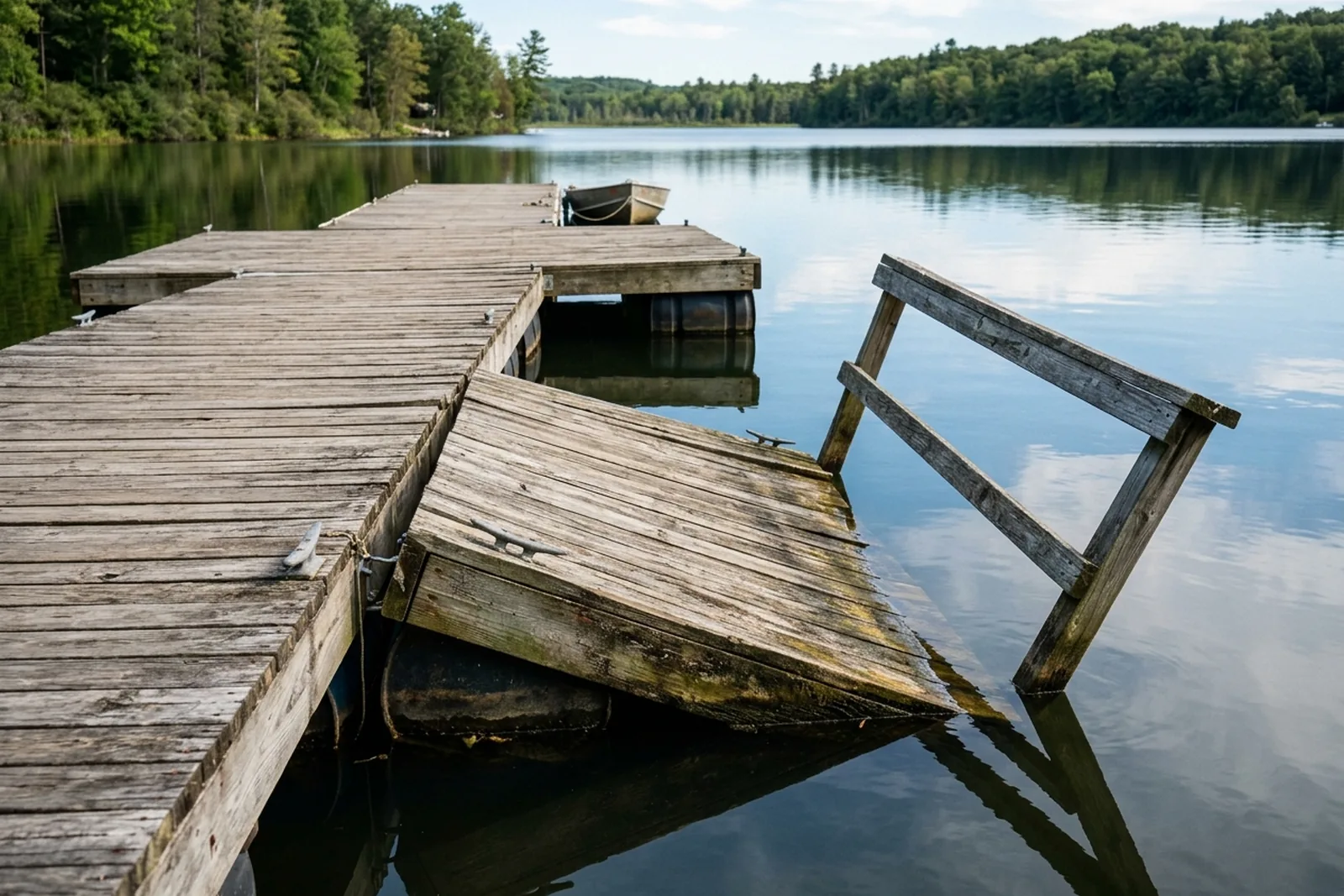
Flotation problems start small and get expensive. Here’s what to watch for on your dock.
- A corner or side sits low. The most common sign of a failed or waterlogged float.
- The whole dock rides lower than it used to. Floats lose buoyancy as they age and absorb water.
- Foam pieces in the water. Older exposed foam breaks down and sheds into the lake.
- The dock tilts when people walk to one side. Weak flotation can’t handle shifting loads.
- Walkway or gangway angle changes. A low dock changes how the walkway sits on it.
- Decking that’s no longer level. A slope often traces back to flotation underneath.
- New stress cracks or bent frame parts. The frame is carrying loads the floats should be.
Why it’s worth fixing now
When one float fails, the frame and nearby floats carry extra load. Left alone, that can lead to bent crossmembers, cracked welds and more failed floats. Replacing a few floats is far cheaper than frame repair.
See dock flotation replacement for how it’s done, or request a free estimate.